WESTERN BLACK BRIDGED
LEAF TURTLE
CYCLEMYS ATRIPONS
The Western Black Bridged Leaf Turtle, (or
'Southern Stripe-necked Leaf Turtle' as it is also sometimes referred to) comes
from Cardamom Mountains in Cambodia. In 2013 all species of Cyclemys
were listed CITES Appendix ll, to protect them from over collection for food and the Pet
Trade. It is now an offence to trade in wild collected Cyclemys
of all species.
They are one of the few Turtle species that can
feed on land as well as in the water. They are omnivorous, but Adults tend more
vegetarian preferring more fruit in their diet. (WARNING:
DON'T FEED BANANA PEEL, THIS CAN BE FATAL!!)
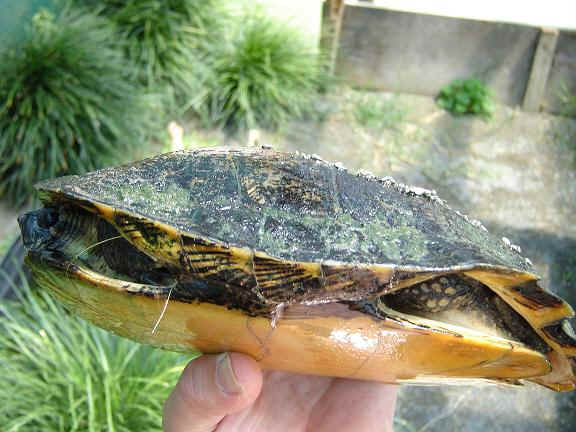
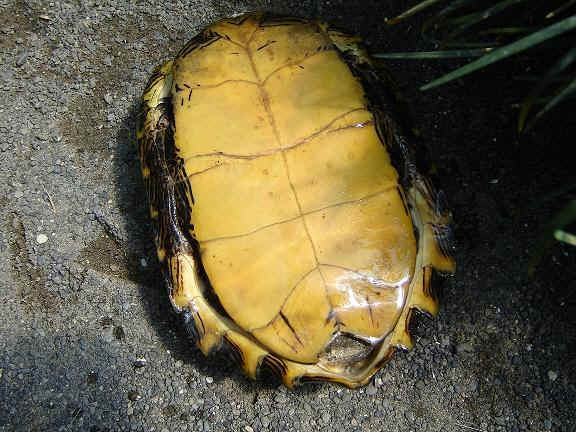
Both the male and female Western Black Bridged Leaf
Turtle grow to approximately 23cm. The male has a larger tail and is more
elongate in the shell in comparison to the female.
The shell of the adult Western Black Bridged Leaf Turtle ranges from an
olive-brown to dark brown carapace, and orange-yellow to yellow plastron. With age they
lose the spectacular 'radiating leaf vein' patterning seen on the juvenile below. The skin
can range from an olive or grey-green shade. The striping on the neck is a very pale
pinkie colour.
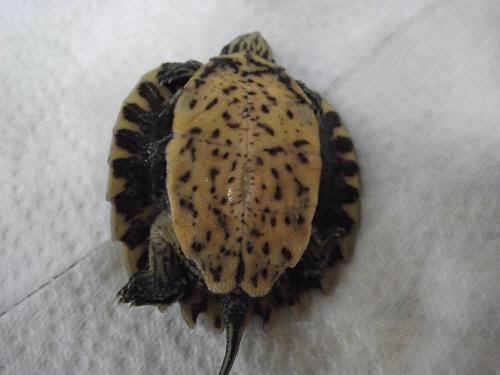
Hatchling and Juvenile Western Black Bridged Leaf Turtles scutes have an
amazing 'radiating leaf vein' pattern on their carapace and plastron.
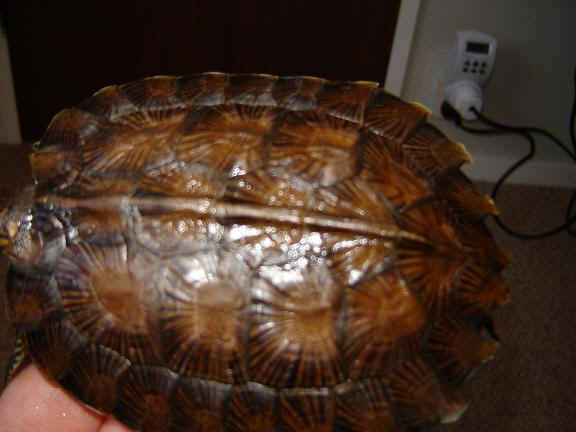 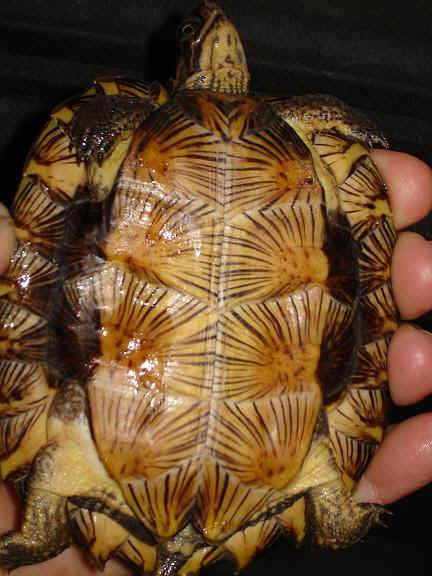
Adult females lay one clutch of 3-6 large eggs (up to
60mm long & weigh up to 36 grams) per year. Unlike most other species of Turtles that
lay their eggs in holes dug in the ground, Western Black Bridged Leaf Turtles
lay their eggs on top of the ground in a small depression under over hanging grasses.
Females have a hinged plastron that allows her to lay such large eggs.
Western Black Bridged Leaf Turtles are semi aquatic Turtles and spend
almost as much time out of the water as they do in the water. They are 'bottom
walkers' just like the Reeve's Turtles. This means that they aren't strong
swimmers like true 'aquatic' Turtles, (ie: Eastern Snake-neck Turtles, Red-eared Turtles,
Eastern River Cooters) and tend to walk along the bottom of their pond / tank rather than
swim. Like the Reeve's Turtles, juveniles are better swimmers than adults. If you intend
keeping Western Black Bridged Leaf Turtles in deeper water, the water
temperatures must stay above 20oC to prevent drowning. I strongly recommend
that these Turtles are able to reach the water surface whilst standing on the bottom of
their pond / tank.
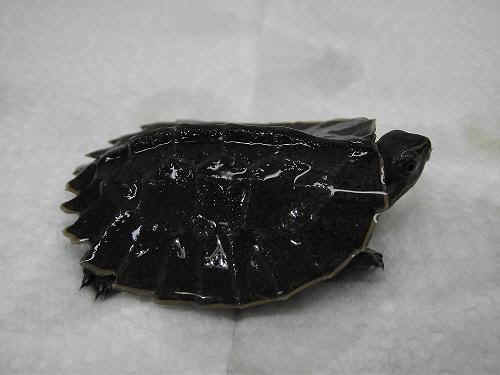
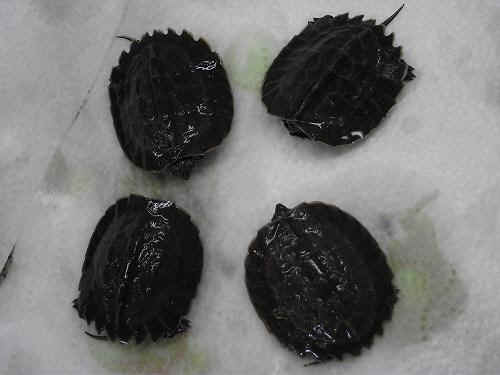
The below photos are 2012/13 hatchlings hatched here at Hot
House Turtles. These photos were taken when the Western Black Bridged Leaf Turtles
are at one week of age. Notice how black the 'Black Bridge' is. This key identification
marking is evident from day one for this species and is a determining factor between
closely related Cyclemys pulchristriata! The leaf vein
patterning develops at approximately three months of age.
Currently the Western Black Bridged Leaf Turtles are
bred in extremely low numbers in NZ. This is due to there being so few breeding pairs,
their low clutch numbers and their specific incubation requirements.
The Western Black Bridged Leaf Turtle are
very personable and reasonably hardy Turtles, and is ideal for those who want to keep
something different.
Back |